01 · Capture
Staff submit only the subscriber, provider, payer, and CPT details that need verification — a controlled source of truth for the call.
We don’t only advise on infrastructure — we ship products on top of it. Each one runs on the same practices we recommend to clients.
Insurance verification, simplified. iVerify turns payer coverage calls into structured, reviewable verification records without losing human oversight.
Chasing eligibility on the phone is slow, and what was said tends to survive only as a note someone typed afterwards. iVerify keeps the submitted facts, the payer conversation and the final human decision connected to one case from start to finish.
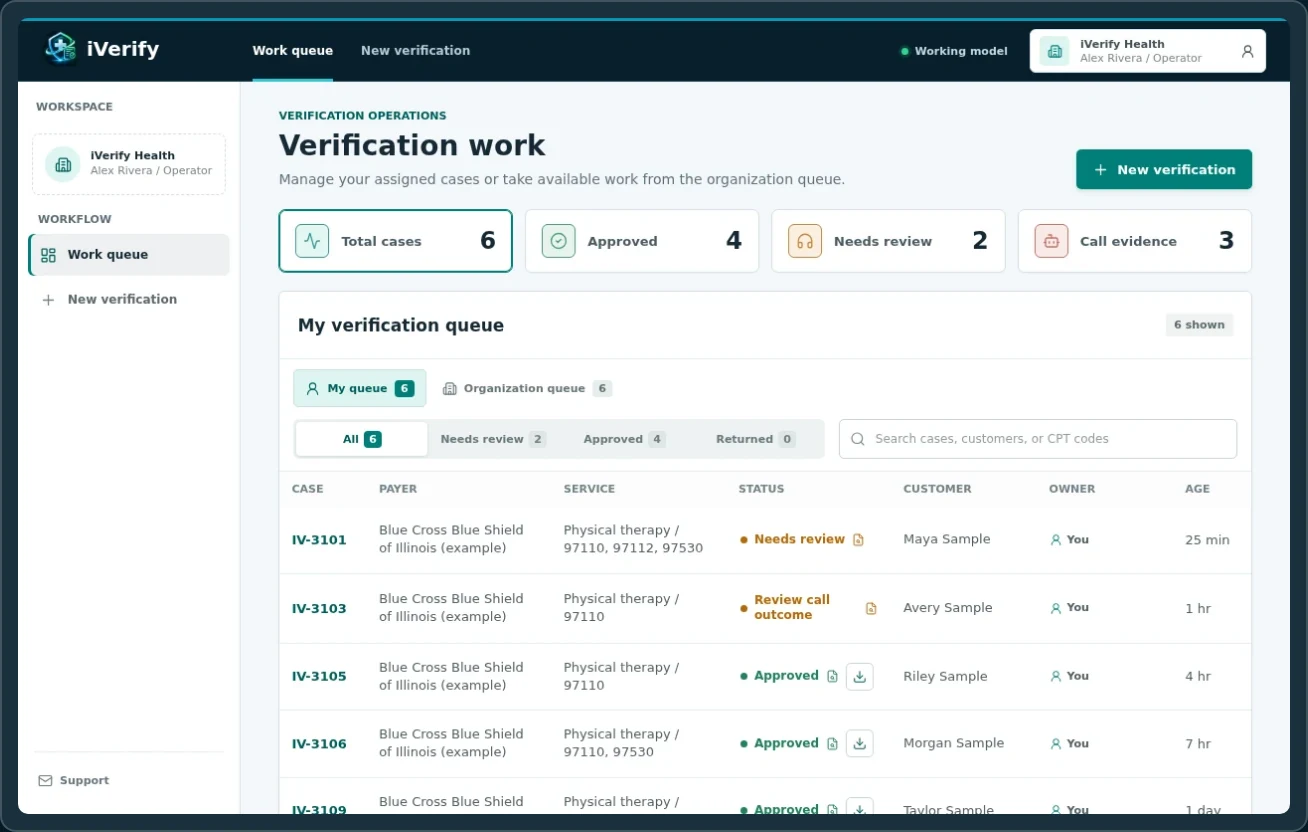
Staff submit only the subscriber, provider, payer, and CPT details that need verification — a controlled source of truth for the call.
A queued voice workflow follows the payer’s required sequence, limits confirmation to the submitted case details, and records the answers it receives.
A person confirms the result, resolves exceptions, and approves the record. Call evidence never becomes an approved verification on its own.
iVerify is a working model demonstrated with synthetic records, and sign-in is limited to invited users. A production rollout adds the customer’s own identity, compliance and infrastructure controls — managed SSO, audited authorization, encryption and key management, retention policies and monitoring.
If that is a problem you have, we would like to hear about it.
iVerify runs on infrastructure defined in code, deployed through a pipeline, and monitored the way we would set it up for a client. Tenant separation, role boundaries and audit trails are architecture decisions, not features bolted on at the end.
It is the most direct answer we can give to a fair question: does the person advising us actually operate anything?
The environment is described in Terraform and rebuildable from the repository.
Role separation and tenant isolation decided up front, not retrofitted.
Repetitive calls, records that live in someone’s notes, no audit trail. Tell us what it looks like and we will tell you honestly whether it can be automated well.